Trending


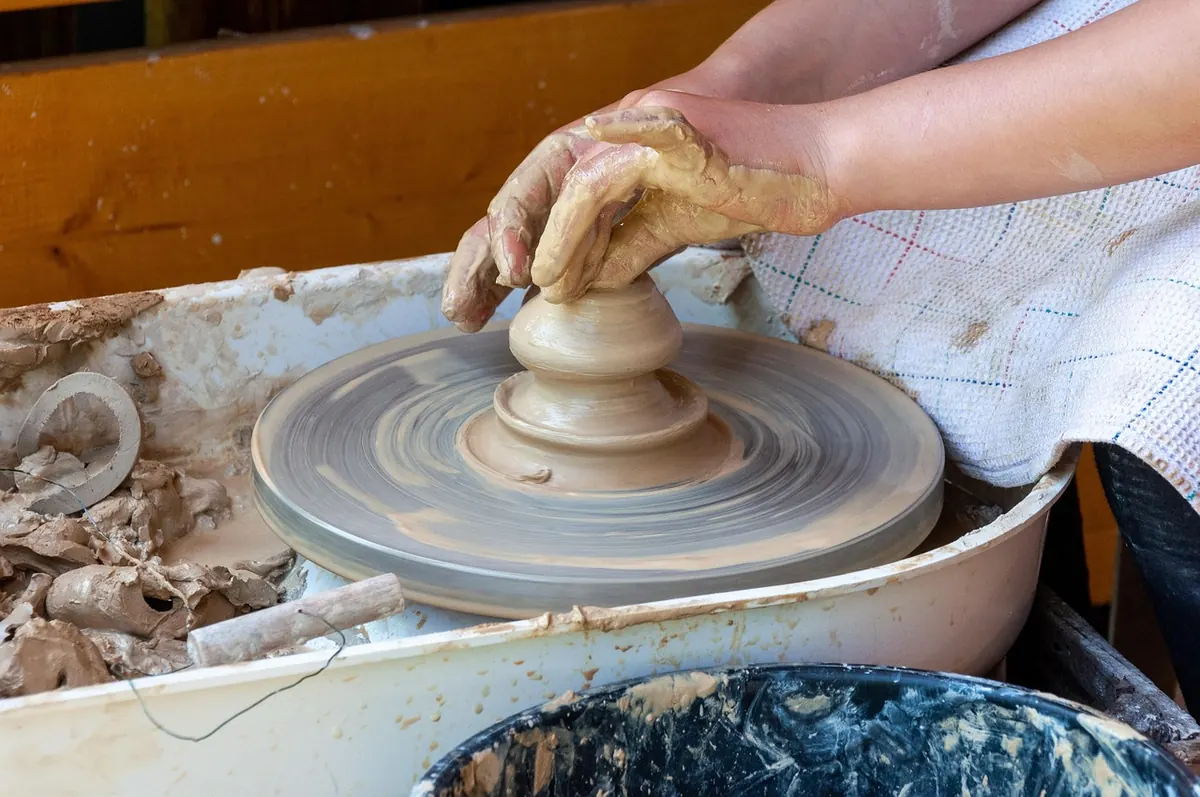
Almost everyone who takes up clay pictures the same scene first: a wheel, a spinning lump, and hands pulling a tall cylinder out of nothing. It's a beautiful image, which is why so many beginners sign up for a wheel class and quit three weeks later, when the same two pounds of clay has collapsed on them eleven times. Handbuilding gets a fraction of that attention, but it teaches you the material faster, more cheaply, and with far fewer tears. Neither method is better than the other. They ask different things of you, and knowing what they ask for is most of the decision.
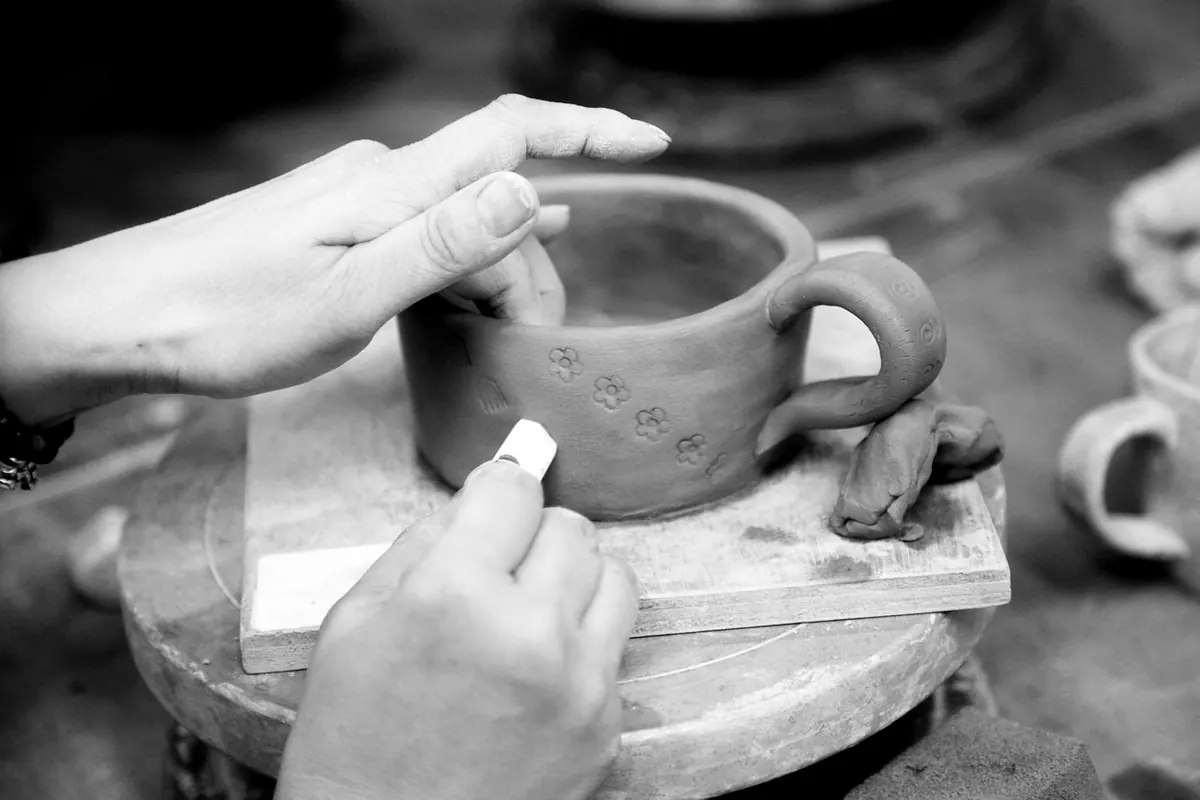
Handbuilding is anything shaped without a spinning wheel: pinching, coiling, slabs, molds, extruded profiles. Your kit is small — a rolling pin or slab roller, two or three wooden ribs, a needle tool, a sponge, a cutting wire, and a stack of plastic bags for slow drying. Most of it fits in a shoebox, and none of it has to be plugged in.
The skills are additive, which is the kindest thing about it. If your first pinch pot comes out lopsided, you smooth the rim and put it on the shelf; it is still a pot. Coil a cylinder and the joins hold as long as you score and slip them properly. Roll a slab for a mug wall and you learn even thickness by feel — thin spots crack in the kiln, and you find out why on your own piece rather than in a lecture.
Typical first projects look like this:
Handbuilding also tolerates short sessions. Twenty minutes at the kitchen table is a real session, and the piece waits under plastic until you come back. That matters more than people admit when they are deciding whether a hobby will stick.
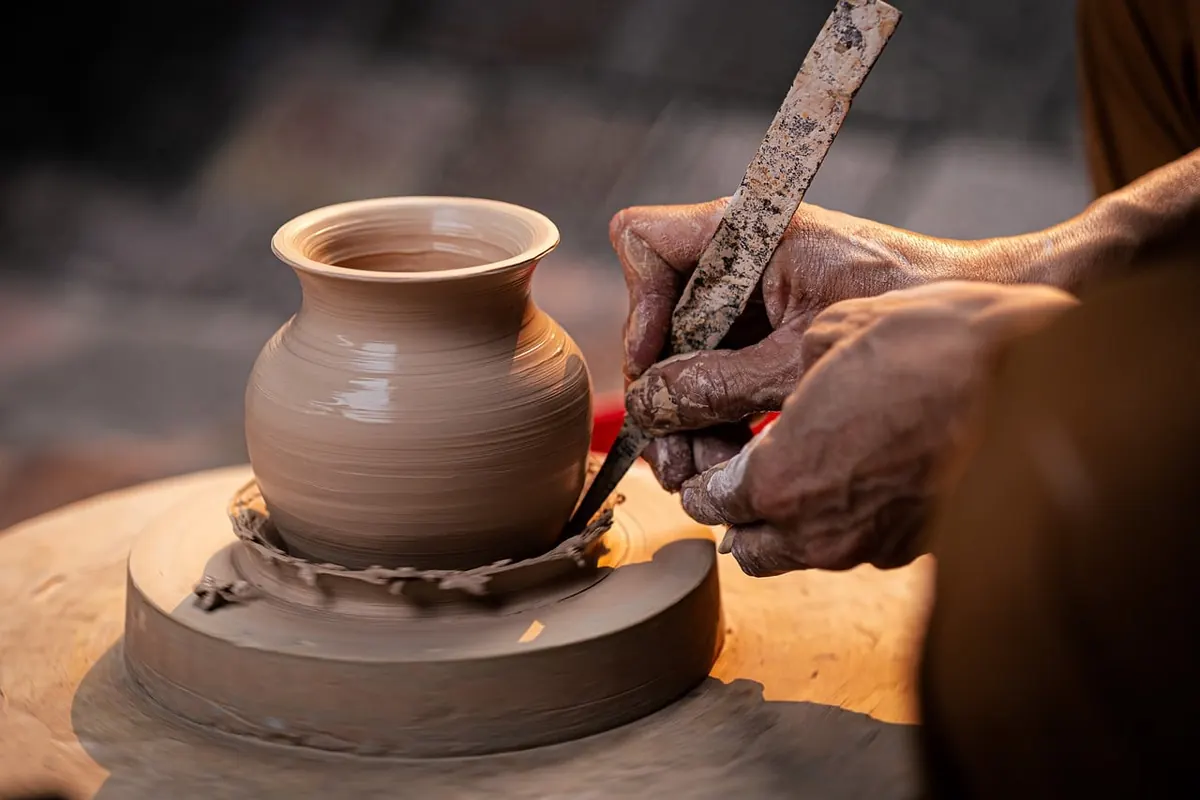
Throwing is a physical skill built on repetition, and it comes in a strict order: centering, opening, pulling walls, shaping, trimming. Each step depends on the one before it, so you cannot skip ahead to the fun part. Nobody centers well in week one. The clay slides, you grip harder, the clay pushes back, and the whole mass topples off the wheel head.
Then it works — the lump goes round and still under your palms — and you understand why people get hooked. From there a cylinder takes minutes instead of an afternoon. That speed is where the wheel wins outright. Twenty matching mugs? Wheel. Twenty handbuilt mugs, each with its own wobble? Handbuilding.
Handbuilders finish pieces, and often glaze them. Throwers usually produce a few thick bowls and a bucket of reclaim. This is normal, and it is not a sign that you lack talent — centering is a coordination problem, not a personality test.
On the wheel, the work moves into your hands. You stop thinking about pressure and start thinking about the profile you want. Handbuilding hits its own wall around the same time: ambition outruns technique. Big coil pots lean, slab handles crack at the seam, rims warp on the shelf because they dried unevenly.
Both methods plateau until you choose a direction. Most potters eventually use both — thrown forms altered by hand, handbuilt forms finished with thrown parts, handles pulled off the wheel and attached to slab mugs. The divide between the two camps is much softer than beginner classes suggest.
Handbuilding needs a table, a few feet of shelf, and a place where a little mess is tolerated. The wheel is the expensive part of the other path, along with batts, buckets, and a stool at the right height for your body. If you rent an apartment or aren't sure yet, a class or a community studio membership is almost always the smarter first move — it usually costs less than buying equipment, and it comes with a kiln, which is the one thing you genuinely cannot work around.
One safety note worth repeating: the hazard in a studio is dry clay dust, not wet clay. Wipe surfaces with water instead of sweeping them, avoid sanding dry greenware indoors without a proper mask, and keep drinks and food off the work table.
More than you'd expect. Throwing teaches you how clay behaves under pressure and how much water is too much. Handbuilding teaches you what clay does when left alone: how it shrinks, how it stiffens, when a join will hold and when it will pop. Throwers who learn to handbuild get better at lids, spouts, and handles. Handbuilders who learn the wheel gain speed and a feel for symmetry. Time spent on either one is not wasted on the other.
Pick one method, commit to four to six weeks, and keep everything you make, including the disasters. Photograph each piece before it goes on the shelf and jot a line about what you'd change — you will forget otherwise, and the notes become the most useful thing in your studio.
Don't buy a wheel until you've thrown for a full season at a studio. Do buy a few good ribs, a wire, and a proper sponge early; they're cheap and they change how the clay responds to you. Set a timer if you tend to overwork a piece, because clay has a point of no return and beginners always find it the hard way.
If you can manage it, spend one term doing both: an hour at the wheel, an hour at the table. The potters who improve fastest are usually the ones who stopped treating it as a choice and started treating it as one craft with two sets of tools.
Photo: Tienpts / Pixabay